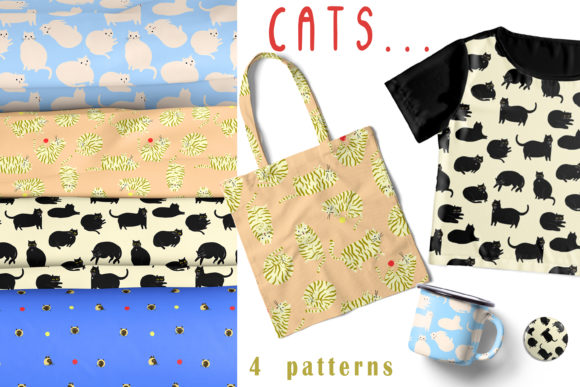
Cats Seamless Patterns: A Designer's Real-World Review
As an experienced designer who has stitched thousands of designs for clients and personal projects, I know that finding the right embroidery design is about more than just a cute image. It is about how that image behaves when it hits the fabric, how it holds up in the wash, and whether it elevates a handmade product or makes it look cheap. Recently, I put the Cats Seamless Patterns collection to the test. I wasn't looking at them as static images on a screen; I was evaluating them as potential assets for real-world commercial embroidery and small business merchandise.
The First Impression: Mood and Visual Personality
When you first open the files for Cats Seamless Patterns, the immediate feeling is one of playful versatility. Unlike single motifs that scream "logo," seamless patterns offer a texture and rhythm that can transform a plain surface into something special. The visual personality here is soft yet distinct, creating a mood that feels cozy, nostalgic, and undeniably charming.
For a designer eyeing this for a trendy clothes design, the layout suggests a natural flow. It doesn't feel cluttered, which is a common pitfall with many pattern packs. The spacing between the feline figures allows for breathing room, ensuring that the final finished product won't look like a chaotic mess of thread. Whether you are aiming for a nursery decor item or a boutique branding piece, these graphics carry a warmth that customers respond to instantly. They feel approachable, making them perfect for personalized gifts where emotional connection matters most.
Real-Life Application: From Digital File to Stitched Reality
I decided to test these patterns on a practical project: a custom embroidered tote bag for a local craft fair. My goal was to see how the seamless nature would translate into a large-scale embroidery file. The challenge with any repeating motif is maintaining consistency across a wide area without the stitching becoming too dense or the fabric puckering.
In this scenario, Cats Seamless Patterns performed admirably. Because the design relies on a repeating structure rather than complex, isolated details, it created a beautiful, uniform field of texture on the canvas tote. The result looked professional and cohesive, exactly what a customer expects when paying for a small shop product. I also ran a quick simulation for a sweatshirt embroidery project. On a heavier cotton blend, the pattern added a subtle depth that didn't overwhelm the garment's silhouette.
This brings me to another strong use case: baby items. The gentle, repetitive nature of these patterns makes them ideal for baby embroidery on onesies or burp cloths. Parents often look for items that are visually soothing but not over-stimulating. These design assets hit that sweet spot. Imagine a set of matching tea towels or pillow covers featuring this pattern; they would sell incredibly well as holiday gifts or wedding presents because they feel curated and thoughtful.
Navigating Challenges: Where Caution is Key
However, no design is perfect for every situation, and as a reviewer, I need to be honest about where Cats Seamless Patterns might struggle. If you are working with a small hoop size, you need to be careful. While the individual cat shapes are generally clear, squeezing a full repeat into a tiny space can cause the details to blur together during stitching. For very small applications, like an embroidered patch under two inches, you might lose some of the charm.
Fabric choice is equally critical. This pattern works best on stable fabrics like denim, canvas, or tight-knit cotton. If you attempt to stitch this onto stretchy fabric without proper stabilization, the tension from the repeated fills could distort the material. Similarly, textured fabrics like bouclé or heavy fleece might hide the definition of the pattern, making it look muddy rather than crisp. Dark fabrics present another hurdle; unless you use high-quality, opaque threads or a specific underlay strategy, the lighter elements of the pattern might get lost against the background.
I also had to consider curved surfaces. Trying to apply a large, continuous seamless pattern to a cap or a rounded hat requires significant technical skill to avoid bunching. For a beginner or someone using a basic home machine, flat surfaces like aprons, kitchen towels, or flat patches are the safest bet to ensure a clean finish.
Impact on Product Value and Brand Consistency
From a business perspective, the quality of your embroidery project directly impacts customer trust. A poorly executed pattern can make a brand look amateurish, while a well-executed one signals professionalism. Using Cats Seamless Patterns effectively can elevate a simple item into a premium handmade product.
When done right, the repetition creates a sense of luxury and attention to detail. Think about an Etsy seller listing a set of coordinated kitchen linens. The consistent application of the pattern tells the buyer that care was taken in the creation process. It enhances the brand consistency and makes the item instantly recognizable. Furthermore, for digital sellers creating printable mockups, having a versatile pattern like this allows for realistic previews that attract buyers before they even purchase the physical goods.
Practical Notes for the Embroidery Designer
Before you commit to running these files through your machine, there are several steps I recommend taking to ensure success. First and foremost, always test the embroidery design on scrap fabric. You need to verify how the stitch density interacts with your specific materials. Check the thread color contrast carefully; sometimes a design looks great on screen but lacks definition in thread form.
Review the stitch types within the file. Are there excessive areas of satin stitch that might cause pulling? Do the fill stitches run in a direction that complements the grain of the fabric? Confirm your hoop size relative to the pattern repeat to avoid awkward cuts or misalignments. It is also wise to inspect small details closely; if the pattern includes tiny whiskers or eyes, ensure they will hold up after multiple washes.
Don't forget to test your design in black and white mockups. This helps you visualize the value and contrast without the distraction of color. Compare how it looks on light versus dark backgrounds to decide if you need to adjust your stabilizer or thread choices. Speaking of stabilizer, using the correct type is non-negotiable for a clean finish, especially with larger patterns that cover significant surface area.
Finally, if you plan to sell finished items made with these patterns, double-check the licensing terms. Ensure you have the rights for commercial embroidery and understand any restrictions on digital resale. Knowing the specifics of the embroidery file usage protects your business and ensures you can confidently market your creations.
Ultimately, Cats Seamless Patterns offers a solid foundation for creative entrepreneurs and hobbyists alike. It provides the flexibility needed for everything from a quick custom apparel tweak to a major line of craft business merchandise. With the right technique and a bit of foresight, this collection can become a staple in your toolkit for creating delightful, market-ready textiles.